
From Prime Location to Global Prime Address: Decoding the Potential of Wireless Road and the Redefinition of Ultra-Luxury Residences
Propholic EditorialTeam
11 September, 2026 at 20.25 pm
Imagine a residential district that represents the pinnacle of desire for investors and billionaires worldwide—whether it is One Hyde Park in London or the prime enclaves surrounding Central Park in New York. These world-class parcels of land share a strikingly similar ‘DNA’: the seamless confluence of contrasting lifestyle contexts. They blend the influence of an empowered central business district with the tranquil serenity of expansive downtown green spaces. These neighborhoods offer an exceptional quality of life, enriched by deep historical context and modern commercial architecture. When these elements integrate with cross-border property development expertise and a seamless urban transit network, they elevate the benchmarks of super-prime real estate—an extraordinary synergy rarely found in rapidly expanding global metropolises.

A close look at the world’s leading metropolises—across Europe, the Americas, and beyond—reveals a consistent pattern: the most valuable land and real estate seamlessly cluster around expansive central parks and green spaces.
London’s Hyde Park, spanning roughly 350 acres, is surrounded by some of the city’s most prestigious residential enclaves, including Notting Hill, Kensington, and Knightsbridge—home to One Hyde Park, an internationally renowned super-prime landmark. Similarly, New York City’s Central Park covers over 840 acres in the heart of Manhattan. Its perimeter is defined by iconic skyscrapers, luxury hotels, global flagships, and prime office towers, alongside world-class residences such as 111 West 57th Street and 220 Central Park South. In Asia, Singapore’s CanningHill Piers showcases how high-end developments integrate urban vitality with natural surroundings. Tokyo’s 130-acre Yoyogi Park in Shibuya and Paris’s sprawling Bois de Boulogne in the 16th Arrondissement further reinforce this global reality: proximity to green spaces, world-class development expertise, rich heritage, and seamless connectivity collectively redefine real estate standards in global gateways.
When applying this definition of global perfection to Bangkok, one corridor stands out above the rest: Wireless Road.
Wireless Road is far more than a prime location or a typical central business district; it possesses all the hallmarks of a true Global Prime Address. It bridges a rich historical legacy—as a diplomatic and commercial powerhouse—with the lush canopy of Bangkok’s largest downtown green spaces. As international development standards and cross-border investment continue to shape the avenue, Wireless Road is redefining the ceiling for super-prime real estate in Thailand. It no longer compares itself to other districts in Bangkok, but rather takes its place alongside the world’s most elite urban addresses.

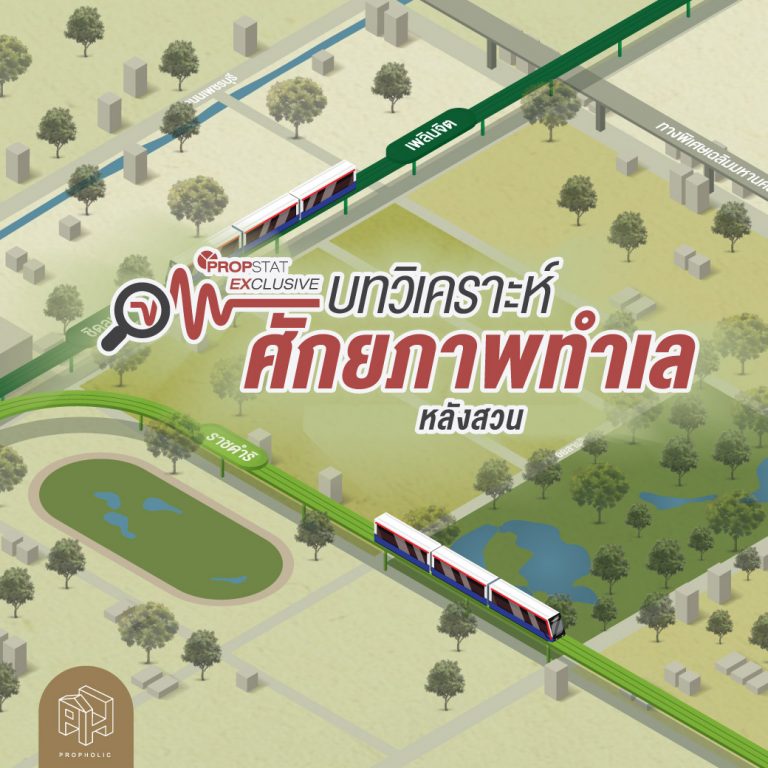
What elevates Wireless Road into a coveted rare item among global real estate collectors is its position at the heart of the city’s grandest “green ecosystem.” The arrival of the Green Bridge—or Green Mile—which seamlessly links Bangkok’s major green lungs, Lumpini Park and Benjakitti Park, is far more than standard infrastructure. It is a rare piece of urban infrastructure that anchors the ethos of nature-integrated living, aligning perfectly with global trends toward wellness and longevity. In today’s world, clean air and expansive green spaces in the core of a metropolis represent the ultimate luxury—a privilege that money alone cannot easily replicate.


With these perfectly harmonious elements, the definition of the ultra-luxury real estate market on Wireless Road has been fundamentally redefined. Global HNWIs and UHNWIs (High-Net-Worth Individuals and Ultra-High-Net-Worth Individuals) no longer seek merely architectural splendour or opulent materials; instead, they aspire to own a priceless “living ecosystem” that provides an exceptional environment and serves as an enduring, sustainable legacy across generations.
This living ecosystem represents a masterfully crafted space where urban dynamism, natural greenery, and human lifestyle converge in perfect balance. It elevates residential standards by placing true emphasis on wellness and long-term vitality (longevity). Through thoughtful design, the surrounding green spaces become an integral part of everyday life, delivering world-class convenience while allowing residents to seamlessly step out and immerse themselves in nature. Amid the fast-paced rhythm of a major metropolis, a home in this Wireless Road location is far more than a place to reside—it is a private sanctuary to recharge the body and restore the mind, offering an invaluable form of ultimate luxury.
This movement aligns with research showing that over the past century, global human life expectancy has increased by more than 30 years—rising from around 40 years in the early 20th century to over 70 years today—driven largely by advancements in medical science, public health, and improved nutrition (Our World in Data, 2023). Consequently, beyond a superior surrounding environment, incorporating wellness and longevity principles into residential design has become essential. A prime case in point is Delos Living in the United States, a pioneer in “Wellness Real Estate” that integrates health innovations directly into living spaces. Features such as advanced air filtration systems, circadian lighting design, and communal areas crafted to foster human connection create an environment that promotes physical and mental harmony while effectively reducing stress.